
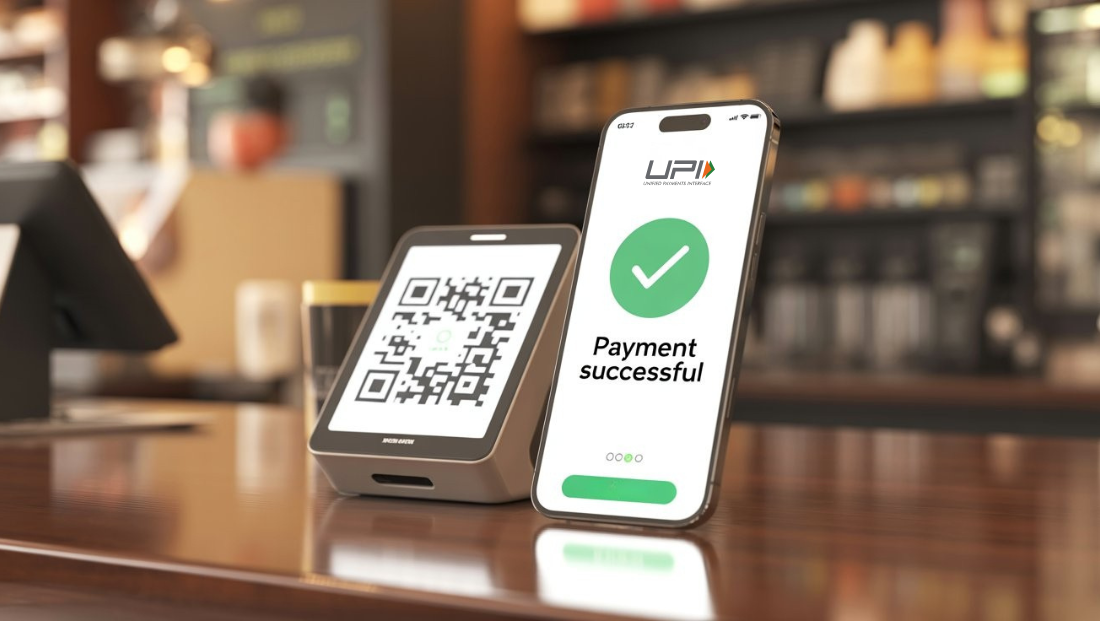
India has become one of the world’s largest digital payments markets, not only in terms of transaction volume but also in the speed at which new payment behaviours have scaled. At the centre of this shift is UPI, a real-time payment system that has moved from early adoption to everyday default in a relatively short period.
This blog explains how UPI processes payments at a system level and examines why merchant adoption has been so widespread. Rather than focusing on surface-level popularity, it looks at the structural and operational reasons UPI has scaled so quickly across India’s diverse commerce landscape.
What UPI Is and How the System Is Structured
UPI is designed as a shared, national payment infrastructure rather than a proprietary product. It enables direct, real-time transfers between bank accounts, regardless of which bank or app the user chooses.
At a structural level, UPI is defined by several core characteristics:
- Unified Payments Interface (UPI) as a single payment layer connecting banks
- National Payments Corporation of India (NPCI) as the system operator and rule-setter
- Bank-to-bank payment rail with no stored-value layer
- 24/7 real-time processing, including weekends and holidays
- Standardised national infrastructure with common technical and operational rules
Because the system is shared, banks and payment apps compete on user experience rather than on access to the rail itself. For merchants, this means accepting UPI does not lock them into a single provider. The underlying infrastructure remains the same, even as front-end apps differ.
How UPI Payments Are Processed
UPI payments are structured to feel simple for users while relying on a tightly coordinated backend flow.
Payment initiation methods
Payments can be initiated in multiple ways, most commonly through a UPI ID or a QR code. Both methods abstract traditional bank details, allowing users to identify payees without sharing account numbers.
Authentication and approval
Once a payment is initiated, the customer authenticates the transaction within their bank or UPI-enabled app. Authentication is handled by the user’s bank, typically through a PIN, ensuring the bank remains responsible for authorisation.
Routing and confirmation
After authentication, the transaction is routed in real time through NPCI’s systems. Funds move directly from the payer’s bank account to the merchant’s bank account, without passing through an intermediary balance.
Settlement and completion
Settlement occurs within the UPI system itself, aligning confirmation and fund movement closely. Both the customer and the merchant receive near-instant confirmation, creating a single, unified payment moment rather than separate authorisation and settlement stages.
This tightly integrated flow is a key reason UPI feels immediate and reliable in everyday use.
How Merchants Use UPI in Practice
Merchants use UPI across a wide range of payment scenarios, from small in-person transactions to large-scale online commerce.
Acceptance across channels
UPI is widely used for in-store payments through static or dynamic QR codes, allowing merchants to accept payments without dedicated card hardware. Online, it is commonly offered as a checkout option for one-off payments.
Merchants typically use UPI for:
- In-store QR payments
- Online checkout payments
- Account funding and wallet top-ups
- Instant payment confirmation
- Reducing dependency on cash
Because confirmation is immediate, merchants can release goods or services quickly. This is particularly valuable in high-volume, low-margin environments where speed and certainty matter.
Why Merchant Adoption of UPI Has Been So High
UPI’s rapid merchant adoption is the result of several reinforcing factors rather than a single advantage.
- Central bank and regulator support: Strong institutional backing positioned UPI as a national priority rather than an optional alternative.
- Universal bank participation: Major banks were required to support UPI, ensuring broad coverage from the start.
- Low transaction costs: Compared to cards, UPI offers a more affordable acceptance model for many merchants.
- Simple merchant onboarding: QR-based acceptance and standardised rules reduced technical and operational barriers.
- High consumer familiarity: As consumers adopted UPI for peer-to-peer payments, merchant usage followed naturally.
- Mobile-first payment behaviour: UPI aligned closely with smartphone-led commerce, particularly in urban and semi-urban areas.
Together, these factors created a network effect where consumer usage and merchant acceptance reinforced each other.
Operational Characteristics Merchants Should Understand
While UPI simplifies acceptance, it also introduces operational characteristics merchants must account for.
UPI is a push-payment system, meaning customers initiate payments and authorise them through their bank. This removes card-style chargebacks, changing how disputes and reversals are handled. Refunds are processed as new outbound transactions rather than reversals of the original payment.
System availability depends on both bank infrastructure and app uptime. While the core UPI system operates continuously, individual bank outages or app issues can affect transaction success rates at the edges.
Reconciliation relies on transaction references rather than batch settlement reports. Merchants must ensure their systems capture and match these references accurately to avoid accounting gaps.
These characteristics require different operational processes compared to card-based payments, even though the customer experience feels simpler.
Conclusion
UPI has become a foundational payment method in India by aligning infrastructure design, regulation, and user behaviour around a single, shared system. Its real-time, bank-led model removed many of the frictions associated with both cash and card payments, making it attractive to merchants of all sizes.
Merchant adoption has been driven not just by cost or speed, but by how naturally UPI fits into everyday consumer behaviour. The system’s design encourages trust, immediacy, and broad accessibility, which in turn supports high transaction volumes.
For businesses operating in India, understanding how UPI works and why it scaled so effectively is essential. Payment strategies that align with UPI’s operational realities are far better positioned to meet local expectations and support sustainable growth in one of the world’s most dynamic payments markets.
FAQs
1. Is UPI a private payment app or a national payment system?
UPI is a national payment system, not a private app. While consumers interact with UPI through bank or third-party apps, the underlying infrastructure is shared and centrally governed, with banks connected through a common set of rules and standards.
2. Why do merchants prefer UPI over cards in many cases?
Merchants often prefer UPI because payments are real time, costs are typically lower than card acceptance, and there is no chargeback mechanism. Instant confirmation also improves cash flow and operational certainty.
3. Does accepting UPI lock merchants into a specific provider?
No. UPI is infrastructure-led rather than provider-led. Merchants can work with multiple banks or PSPs while still accepting the same UPI payments from customers using different apps.
4. How are UPI refunds handled if there are no chargebacks?
Refunds are processed as new outbound UPI transactions from the merchant to the customer. This requires merchants to have clear refund workflows rather than relying on automated reversal mechanisms.
5. Is UPI mainly used for small transactions?
While UPI is widely used for small, everyday payments, it is also commonly used for higher-value transactions, bill payments, and online purchases. Its real-time nature makes it suitable across a wide value range.
6. What role do banks play in UPI payments?
Banks handle authentication, authorisation, and account-level controls. Even when a payment is initiated through a third-party app, the customer’s bank remains responsible for approving the transaction.
7. Can UPI be used for online and in-store payments equally?
Yes. UPI is used extensively both in physical locations via QR codes and online as a checkout payment option, particularly for one-off and account-based payments.
8. What operational challenges should merchants plan for with UPI?
Merchants need to manage reconciliation using transaction references, handle refunds manually, and account for bank or app-level downtime. These differ from card-based operational models.


Leave a Reply