
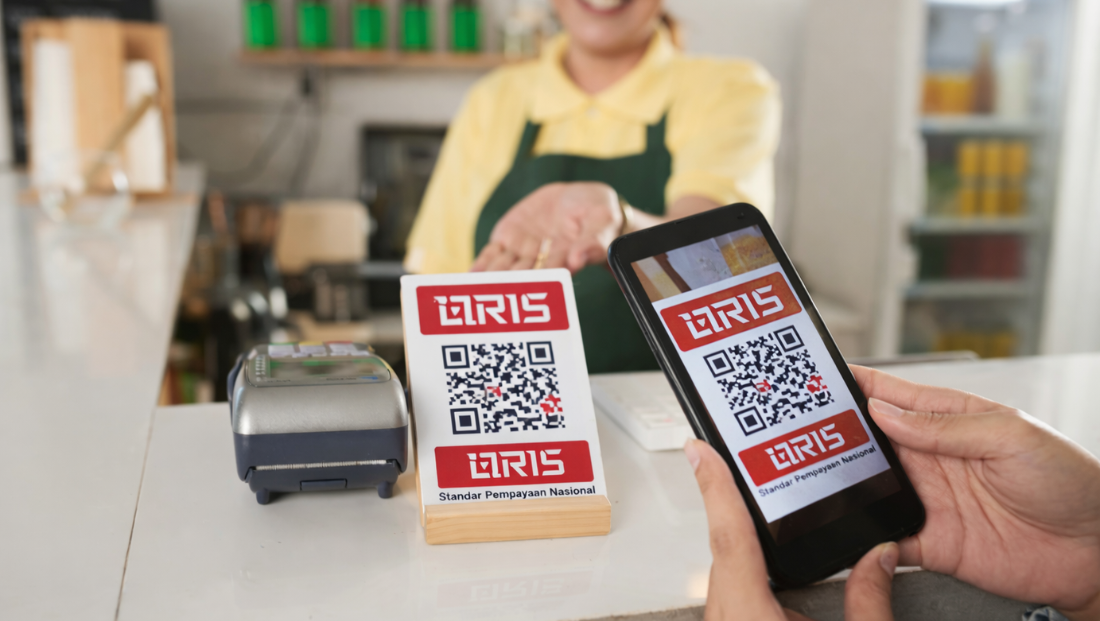
Indonesia’s digital payments landscape has expanded rapidly, but not through a single dominant private platform. Instead, the market has evolved around a nationally coordinated approach to QR-based payments. QRIS sits at the centre of this shift, reshaping how consumers pay and how merchants accept funds across the country.
Rather than introducing a new payment method, QRIS standardised an existing behaviour of QR scanning and aligned it across banks, wallets, and payment providers. This decision changed the economics and operations of payment acceptance, particularly for physical merchants and small businesses.
This blog explains how QRIS operates at a system level and what its adoption means in practice for merchants accepting payments in Indonesia.
What QRIS Is and How the System Is Structured
QRIS, short for Quick Response Code Indonesian Standard, is Indonesia’s national QR payment framework. It defines how QR codes are created, read, and processed across the payments ecosystem, replacing a previously fragmented environment where banks and wallets used incompatible formats.
The system operates under the oversight of Bank Indonesia, which sets the rules governing participation, technical standards, and settlement coordination. QRIS itself is not a consumer-facing product. Instead, it functions as shared infrastructure that issuing apps and acquiring institutions connect to.
Several structural characteristics define how QRIS works:
- A single national QR standard, used across all participating providers
- Interoperability between banks and wallets at the point of acceptance
- Domestic payment focus, supporting local currency transactions
- Provider-neutral design, where the QR represents the merchant, not the app
For merchants, this structure removes the need to manage multiple QR codes or negotiate acceptance separately with each provider.
How QRIS Payments Are Processed
From the customer’s perspective, QRIS payments feel straightforward. The underlying process, however, involves a coordinated sequence across issuing apps, acquiring institutions, and settlement participants.
Merchants may present QRIS codes in static or dynamic form, depending on their setup. Static codes are fixed and commonly used by smaller merchants, while dynamic codes are generated per transaction in more structured retail environments.
Once the customer scans the code using a supported bank or wallet app, authentication takes place entirely within the issuing app. The customer approves the payment using the app’s security controls, keeping authorisation responsibility with the issuer.
Transaction confirmation is returned in near real time. Both customer and merchant receive immediate feedback, allowing fulfilment to proceed without delay. Settlement then occurs through participating institutions according to QRIS-defined rules and timelines.
The key operational distinction for merchants is that confirmation and settlement are closely linked, even though funds availability may still depend on the acquiring arrangement.
How Consumers Use QRIS in Everyday Payments
QRIS has become part of routine consumer behaviour, particularly for in-person transactions. Its usage is shaped less by novelty and more by availability and habit.
Consumers commonly use QRIS for:
In-store retail purchases
Small-value, frequent transactions
Food, transport-adjacent, and service payments
The method fits naturally into mobile-first usage patterns. Scanning a QR code requires no physical interaction and avoids the need to carry cash or cards. Over time, QRIS has also reduced friction for informal and micro-merchants, expanding acceptance into environments where traditional payment terminals are uncommon.
Because QRIS works across banks and wallets, consumers do not need to adjust behaviour based on where they are shopping. This consistency has helped QR-based payments move from optional to expected in many daily contexts.
What QRIS Means for Merchants Accepting Payments
For merchants, QRIS changes acceptance dynamics rather than simply adding another payment option.
A single QR code can serve customers using multiple banks and wallets, reducing operational overhead. This interoperability removes the need to prioritise specific providers or manage parallel acceptance flows.
Merchants also benefit from faster checkout interactions. Payments are initiated and approved within the customer’s app, with confirmation returned quickly. This is particularly valuable in high-throughput environments where speed directly affects service capacity.
Just as importantly, QRIS standardises the customer experience. Staff training becomes simpler, signage is consistent, and payment acceptance follows a predictable pattern regardless of who the issuing provider is.
Operational Characteristics and Considerations for Merchants
While QRIS simplifies acceptance, it introduces operational realities that merchants must plan for. Settlement timing is not always immediate.Although confirmation is real time, funds may reach the merchant account according to provider-specific schedules. This can affect cash flow planning.
Refunds are typically processed as new outbound transactions rather than reversals. Merchants need clear internal workflows to handle these cases and manage customer expectations. Reconciliation relies on transaction references rather than batch settlement reports. Accurate capture and matching of these references is essential for accounting and dispute resolution.
Finally, transaction limits and connectivity dependencies apply. Limits are defined by regulation and provider rules, while uptime depends on bank and app reliability at the edge of the system.
Conclusion
QRIS has become a core payment method in Indonesia by standardising how QR payments work rather than reinventing consumer behaviour. Its interoperable, provider-neutral design simplifies acceptance while expanding reach across banks and wallets.
For merchants, QRIS offers broad access and consistent checkout experiences, but it also requires understanding settlement behaviour, refund mechanics, and reconciliation processes. Treating QRIS as infrastructure not just a payment option is essential for operating effectively in Indonesia’s payments ecosystem.
Is QRIS a payment app or a payment method?
QRIS is not a payment app. It is a national QR code payment standard that banks and wallets use to process payments in a consistent way. Consumers interact with QRIS through their bank or wallet apps.
2. Who regulates and oversees QRIS in Indonesia?
QRIS operates under the oversight of Indonesia’s central bank. The regulator sets technical standards, participation rules, and settlement requirements to ensure interoperability and stability across the ecosystem.
3. Can merchants accept payments from both banks and wallets using QRIS?
Yes. One of QRIS’s core features is interoperability. A single QRIS code can accept payments from multiple banks and wallet providers, without requiring separate integrations.
4. Are QRIS payments settled instantly to merchant accounts?
Payment confirmation is real time, but settlement timing depends on the acquiring institution and provider arrangements. Funds may not always be available immediately despite instant confirmation.
5. How are refunds handled for QRIS payments?
Refunds are usually processed as new outbound transactions rather than reversals of the original payment. Merchants need defined refund workflows to manage this process clearly.
6. Is QRIS mainly used for small transactions?
QRIS is widely used for small, everyday payments, but it is also accepted for larger retail transactions. Usage depends more on merchant type and context than on strict value limits.
7. Does accepting QRIS reduce the need for multiple payment providers?
In many cases, yes. Because QRIS standardises QR acceptance, merchants can reduce reliance on multiple QR providers while still reaching a broad customer base.


Leave a Reply